Understanding Laser Therapy in Guelph
Is it possible to stimulate tissue healing using light instead of medication?
As clinical research into the field expands, scientists are uncovering how targeted wavelengths of light interact directly with cellular biology. Rather than simply masking symptoms, laser therapy offers an evidence-based method to modulate inflammatory pathways and support damaged tissue at its foundational level.
When dealing with acute joint pain, tendonitis, or chronic soft tissue strain, managing inflammation is the first step for recovery. While ice packs and anti-inflammatory medications are common go-to options, they primarily address symptoms at the surface or systemically. Modern rehabilitation offers a more targeted, non-invasive approach: Low Level Laser Therapy / LLLT (also known as Photobiomodulation or Cold Laser Therapy). At Westwood Physiotherapy in Guelph, we use evidence-based laser technology to stimulate biological repair directly within damaged tissue at the cellular level.
The Science: How Light Heals at the Cellular Level
Laser therapy uses specific, concentrated wavelengths of red and near-infrared light to penetrate skin and muscle tissue. Rather than relying on heat to produce an effect, it triggers a photochemical reaction within your cells. LLLT uses light energy (typically in the red to near-infrared spectrum, ~600–1000nm) applied to tissue at doses too low to heat or damage it. This distinguishes it from surgical or high-power lasers.
Here is the step-by-step biological mechanism:
1. Cellular Light Absorption (Mitochondria)
When near-infrared laser light reaches injured tissue, it is absorbed by the mitochondria, the energy-producing centers inside your cells. Soaking up this light energy acts like a quick recharge for stressed, damaged tissue.
2. Accelerated ATP Energy Production
Absorbing light energy triggers your cells to generate significantly more ATP (adenosine triphosphate). ATP serves as the primary fuel your body relies on to repair damaged muscle fibers, build healthy tissue, and speed up recovery times.
3. Down-Regulation of Inflammatory Cytokines
Injury causes your body to flood the area with inflammatory signaling molecules (cytokines) that drive swelling and pain. Laser therapy helps lower these irritation signals while boosting natural anti-inflammatory markers, easing joint pressure and soreness.
4. Circulation and Waste Removal
The light stimulates your body to release nitric oxide, a natural compound that dilates local blood vessels. This improved blood flow delivers a steady supply of fresh oxygen to the injury site while efficiently flushing away trapped fluid and cellular waste.
Mechanism of Action
- Photons are absorbed by mitochondrial chromophores (notably cytochrome c oxidase)
- This increases ATP production and cellular metabolism
- Downstream effects include modulation of inflammatory mediators, reduced oxidative stress, and increased blood flow (vasodilation)
- Net effect: reduced pain, reduced inflammation, and accelerated tissue repair
Bioflex Laser Class IIIB
- BioFlex Laser Class IIIB systems (600–900 nm) generally penetrate 5–10 cm (approx. 2–4 inches) into human tissue.
- Red light (660 nm) is generally limited to 1 cm or less, targeting shallower, superficial structures. Energy is absorbed by more photoacceptors (i.e. hemoglobin) and hence the energy does not penetrate as deeply (a few mm to 1 cm or more). Higher amount of scatter results in a circular penetration
- Infrared light (840-830 nm) provides deeper, multi-centimeter penetration for deep-seated conditions. Energy is absorbed by less photoacceptors and therefore travels deeper (up to several cm). Decreased scatter results in a more elliptical penetration.
- Laser Probe
- superficial tissue: 1-5s/point
- medium depth tissues 5-10s/point
- deepest tissues 10-15+s/point)
Who Can Benefit from Laser Therapy?
Because laser therapy accelerates soft tissue repair and modulates nerve sensitivity, it is effective across a wide array of orthopedic and neuromuscular conditions:
- Tendonitis & Tendinopathy: Achilles tendinitis, carpal tunnel syndrome, tennis/golfer’s elbow, and rotator cuff strain.
- Joint Conditions: TMJ (jaw) dysfunction, Lumbar/ hip/ knee osteoarthritis, and acute ankle sprains.
- Spine & Nerve Irritation: Cervical disc herniations, sciatica, and chronic lower back stiffness.
- Plant Fasciitis & Foot Pain: Stubborn heel pain and inflammatory arch strain.
- Post-Surgical Inflexibility: Surgical scar tissue sensitivity and lingering swelling post-op.
- Wound healing
What to Expect During Treatment & Potential Side Effects
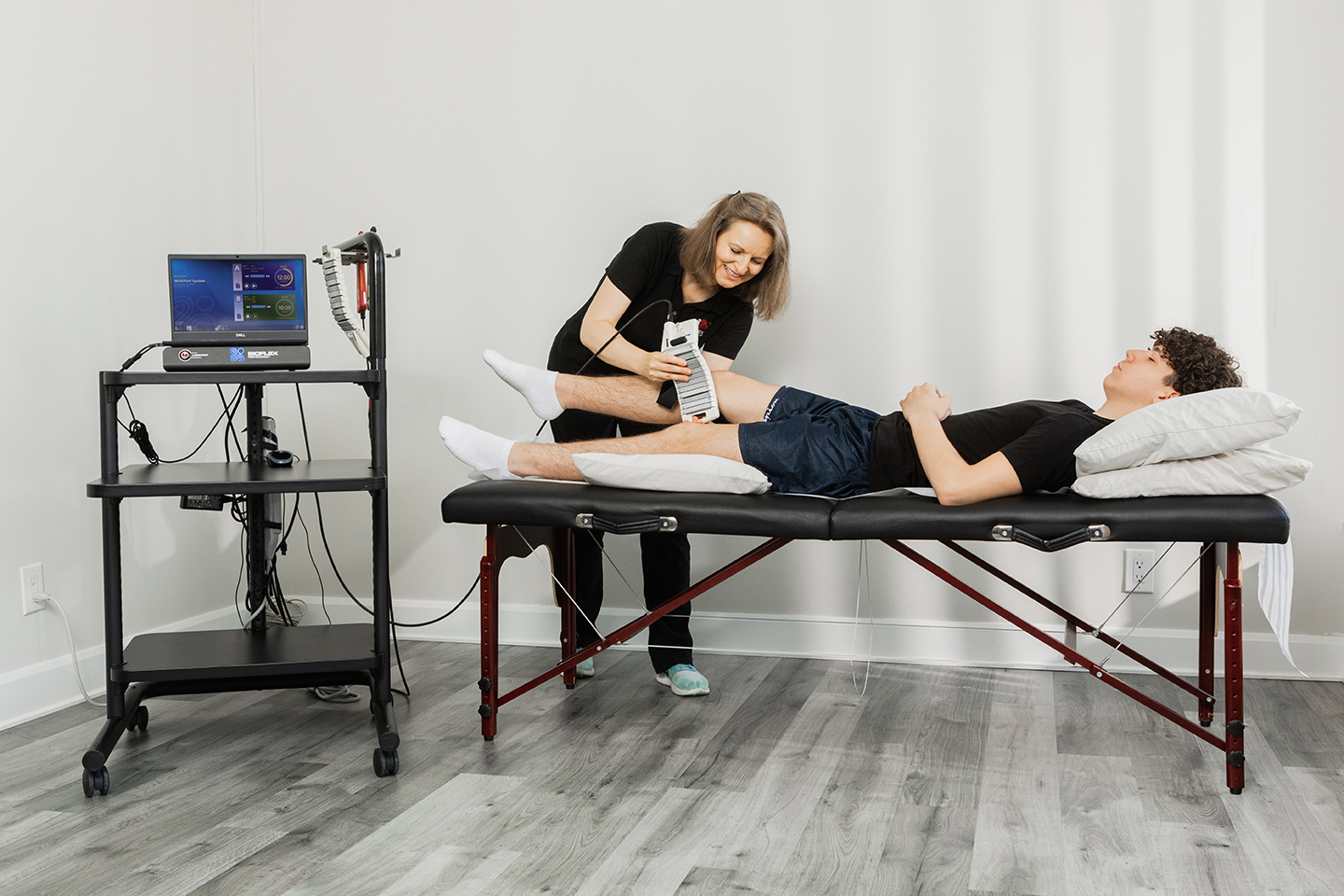
Laser therapy is safe, non-invasive, and painless. During a session, your physiotherapist places a hand-held emitter directly over or slightly above the affected area for anywhere from 3 to 10 minutes depending on tissue depth and condition severity.
- Sensation: Most patients feel very little. With high-intensity (Class IV) lasers, you may feel a gentle, soothing warmth as blood flow increases to the area.
- Safety: Both you and your therapist will wear specialized protective eyewear throughout the session to protect your retina from direct laser beam exposure.
- Side Effects: Side effects are rare and mild. A small percentage of patients may experience a slight, temporary increase in local soreness over the first 24 hours, which is a normal physiological response as blood flow surges and tissue cellular activity ramps up.
Dosing Parameters which your PT considers, include
- Wavelength (nm)
- Power output (mW)
- Energy density/dose (J/cm²)
- Treatment time
- Pulse frequency (continuous vs. pulsed wave)
- Contact vs. non-contact application
Why Laser Therapy Is Not a “Silver Bullet” (The Multimodal Approach)
While laser therapy is a powerful biological accelerator, it is not a standalone cure.
Laser light can reduce local swelling, ease pain, and prime tissues for repair, but it cannot:
- Fix biomechanical movement patterns.
- Build muscle strength or joint stability.
- Magically increase your tendon’s physical capacity to handle weight or daily activity.
Our Clinical Philosophy: Relying strictly on laser therapy without addressing why the injury occurred in the first place often leads to returning symptoms once normal daily activity resumes.
At Westwood Physiotherapy, laser therapy is used as a supportive modality within a multimodal treatment framework. We use light therapy to lower your pain and calm tissue inflammation, creating an optimal window of opportunity for you to participate in active, long-term rehabilitation:
| Laser Therapy Role | Primary Physiotherapy Role |
| Down-regulates local tissue inflammation | Restores joint range of motion and tissue flexibility |
| Increases cellular ATP for faster healing | Builds progressive strength, endurance, and load capacity |
| Temporarily lowers nerve sensitivity and pain | Corrects underlying posture, biomechanics, and movement habits |
Experience Targeted Healing at Westwood Physiotherapy
If lingering pain or chronic inflammation is holding you back from your active lifestyle in Guelph, laser therapy may be the key component needed to accelerate your recovery window. Our experienced physical therapy team will conduct a thorough biomechanical assessment to determine if laser therapy is appropriate for your specific condition and build a comprehensive recovery plan tailored to your goals.
Contact Westwood Physiotherapy today to schedule your initial consultation and discover how evidence-based care can help you move without pain.