Relearning to Walk After a Stroke: A Guide to Gait Training and Orthoses
Stroke Rehabilitation in Guelph: Taking the First Steps Again
The first time you try to stand after a stroke, your body may not feel like your own. One leg feels heavy, your foot catches on the floor, and every step takes concentration. If you’re a family member, watching someone you love work that hard can be just as overwhelming.
What modern research has pointed towards is that walking is a skill, and skills can be relearned. Stroke rehabilitation in Guelph focuses on helping your brain and body find new ways to work together, one step at a time. This guide explains how gait training works, why practice matters so much and where orthotics fit in.
Why Walking Changes After a Stroke
A stroke damages part of the brain that controls movement, balance or coordination. Walking depends on all three, so even a small stroke can change how you walk.
Common changes include:
- weakness on one side of the body
- foot drop, where the front of the foot doesn’t lift well, so the toes catch or drag
- poor balance or a feeling of unsteadiness
- stiffness or tightness in the leg
- trouble judging where your foot is without looking
- tiring quickly
Why every recovery is different
No two strokes are the same. Recovery depends on many things, including:
- where in the brain the stroke happened, since different areas control strength, balance, sensation and coordination
- how large the stroke was
- your health and fitness before the stroke
- other changes, like memory, vision or mood
- how soon rehabilitation starts and how much practice you get
That’s why comparing your progress to someone else’s isn’t very helpful. Your rehab plan should be built around you.
How the Brain Relearns to Walk
Your brain can change throughout your life. This ability, called neuroplasticity, is the reason recovery after a stroke is possible.
Picture a road that’s been closed by a rockslide. Traffic doesn’t stop forever. Drivers find side streets, and the more those side streets are used, the wider and smoother they become. After a stroke, your brain does something similar. By practicing a movement over and over, you help your brain strengthen backup pathways and build new ones.
Three things seem to help most:
- practicing the real task, like standing up and walking, rather than random exercises
- lots of repetition
- a steady increase in challenge as you improve
Why Early, Steady Practice Matters
The brain is often most ready to change in the first weeks and months after a stroke. Getting moving early, with the guidance of the stroke team, helps make the most of that window.
Early doesn’t mean rushing, though. Research suggests that very intensive activity in the first day or so after a stroke isn’t helpful. What works better is getting up and moving once the medical team says it’s safe, with frequent, shorter sessions that build over time.
The good news is that progress doesn’t stop after the first few months. With steady practice, many people keep improving their walking for a long time after their stroke.
Outpatient Rehab in a Clinical Setting
Physiotherapy in the outpatient clinical setting shifts from safe early mobility and preventing complications to driving functional recovery, participation in daily life/ community as well as long term self management. The stroke rehab sessions become more structured and progressive on high repetition training since the patient is now medically stable and can tolerate higher intensity training.
Gait Training After a Stroke: What It Involves
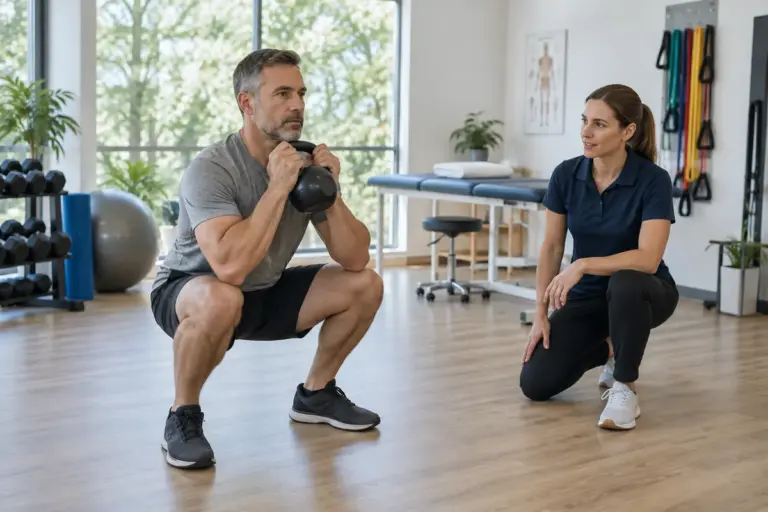
Gait training simply means practicing walking and the skills that support it. The Canadian Stroke Best Practice Recommendations strongly recommend practice that is repetitive, task-specific and gradually made harder, like sit-to-stand, walking further and walking faster.
Depending on your needs, gait training may include:
- practicing sit-to-stand and standing balance
- walking practice on flat ground, then on slopes, stairs and uneven surfaces
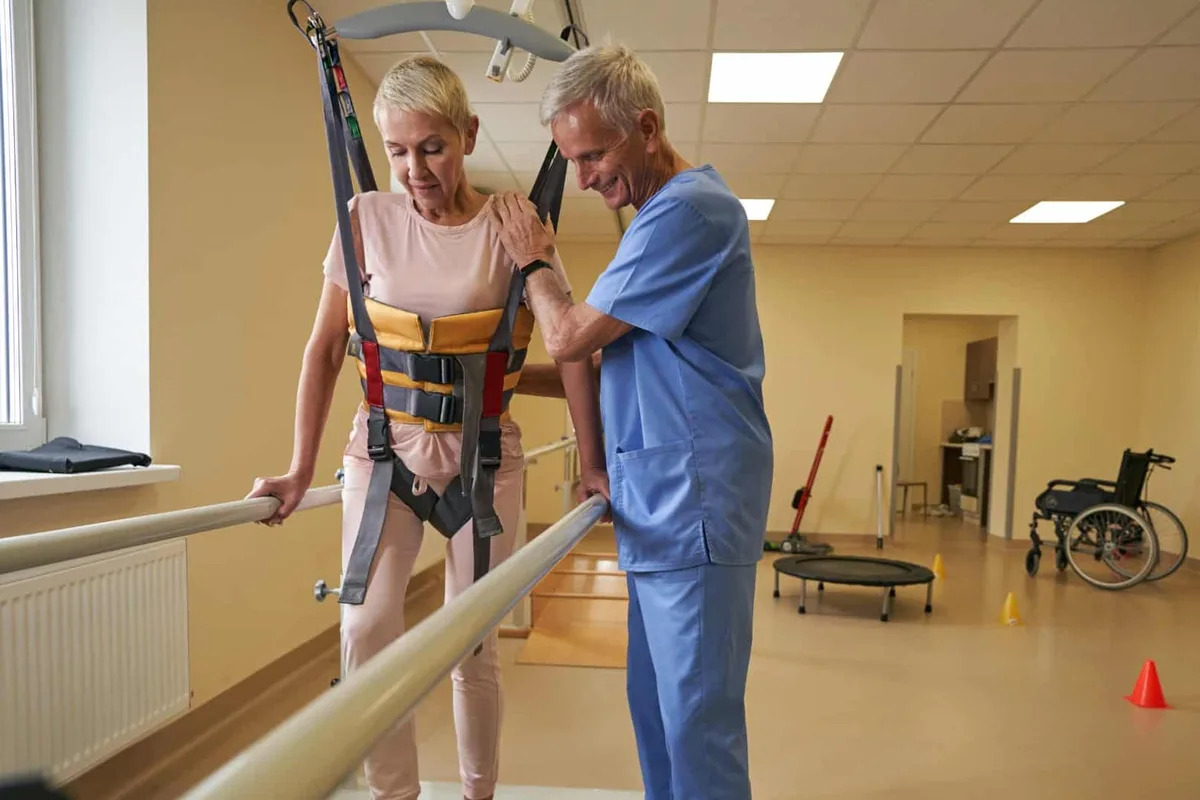
- treadmill walking, sometimes with a harness for support, alongside walking on the ground
- walking in time to a beat or music, which can help with speed and step length
- strengthening exercises for the hips, knees and ankles
- balance training, including seated trunk control and standing work
- aerobic exercise to build stamina once you’re medically stable
Building strength and loading the leg
Putting weight through the weaker leg is a big part of recovery. It helps build strength, improves balance and teaches your brain to trust that leg again. Your physiotherapist will gradually increase the challenge, from supported standing to stepping, climbing stairs and walking longer distances.
Orthoses After a Stroke: When and How They Help
Ankle foot orthosis (AFO), Knee orthoses (KAFO or knee braces), Upper limb splints (hand/ wrist orthoses, dynamic splints) or shoulder supports are more commonly considered orthoses when treating a stroke patient.
What is an ankle-foot orthosis?
The most common orthotic after a stroke is an ankle-foot orthosis, or AFO. It’s a lightweight brace, usually made of plastic or carbon fibre, that fits inside your shoe and runs up the back of your calf. It holds your ankle and foot in a better position as you walk.
AFOs come in different styles. Some are firm and give a lot of support, while others are hinged or more flexible to allow some ankle movement. The right one depends on what your foot and ankle need.
When an orthosis may help
An AFO may be worth considering if you have:
- foot drop, where your toes catch or drag as you step
- an ankle that rolls inward or outward when you put weight on it
- a knee that snaps back or buckles because the ankle isn’t well controlled
- a fear of falling that’s holding back your walking practice
The Canadian Stroke Best Practice Recommendations advise using AFOs for selected people with foot drop, after a proper assessment, with follow-up to check that they’re actually helping.
How orthoses fit into stroke rehab
In the stroke rehab plan, orthoses are tools that help compensate for weakness or the abnormal muscle tone while the patient relearns movement. The type of orthotic device needed largely depends upon the type of stroke a patient may have suffered.
They also fit into the rehab timeline based on the recovery goals. During early phases, where tone and strength are changing, keeping the limb in alignment and joints protected is crucial. Positioning splints are more useful during this period. During active rehabilitation, the orthoses become more task specific, making practice of movement safer and more efficient. The goal remains on supporting high repetition training, not replacing it. Under certain conditions, when the condition is more chronic / if the recovery plateaus, the orthosis may either become a long term mobility aid or is eventually weaned off into a lighter device.
For many people, a well-fitted AFO makes walking safer and less tiring right away. That can mean more walking practice, more confidence and fewer trips or falls.
An orthosis isn’t always meant to be permanent, though. As strength and control improve, your needs may change. Some people move to a lighter brace or stop needing one, while others keep using one long-term. That’s why it should be reviewed regularly as part of your rehab.
Role of Functional Electrical Stimulation (FES)
Functional electrical stimulation, or FES, uses small electrical pulses to activate the muscles that lift your foot as you walk. The same Canadian guidelines recommend it for selected people to improve gait speed, balance and mobility. It acts as a neuroprosthesis rather than a passive brace. Ask your care team whether it might suit you.
Physiotherapy in Outpatient Stroke Rehab: Beyond Walking Practice
Outpatient PT defines clear criteria for stroke rehabilitation goals that go beyond just walking practice.
- Balance and fall prevention
- Cardiorespiratory fitness
- Managing tone and spasticity
- Strength vs motor control
- Orthoses and equipment review
- Community mobility
- Pain and joint protection
- Self management and physical activity
- Education and caregiver support
- Return to work goals
- Interdisciplinary communication and shared goals
Tips for Family and Caregivers
Your support makes a real difference. These tips can help:
- Encourage practice, but let your loved one do as much as safely possible on their own.
- Clear trip hazards at home, like loose rugs, cords and clutter.
- Make sure shoes are supportive and fit well, especially with an orthosis.
- Join therapy sessions when you can, so you learn how to help safely.
- Celebrate small wins. Standing a little longer or walking to the mailbox is real progress.
- Look after yourself too. Caregiving is demanding, and your well-being matters.
The Bottom Line on Stroke Rehabilitation in Guelph
Here’s a quick recap:
- Every stroke is different, so every recovery plan should be too.
- Your brain can build new pathways through repeated, task-specific practice.
- Early, steady practice helps, starting when the medical team says it’s safe.
- Gait training builds walking skill, strength, balance and stamina step by step.
- An ankle-foot orthosis can make walking safer for people with foot drop, and should be reviewed as you improve.
Whether you’re just home from the hospital or months into recovery, it’s not too late to keep improving. At Westwood Physiotherapy in Guelph, we work with stroke survivors and their families to build a walking plan that fits your goals. Book an assessment, and let’s take the next step together.
References
Heart and Stroke Foundation of Canada. (2025). Lower extremity, balance, mobility and aerobic training. In Canadian stroke best practice recommendations: Delivery of stroke rehabilitation to optimize functional recovery. https://www.strokebestpractices.ca/recommendations/stroke-rehabilitation-delivery/4-lower-extremity-balance-mobility-and-aerobic-training